
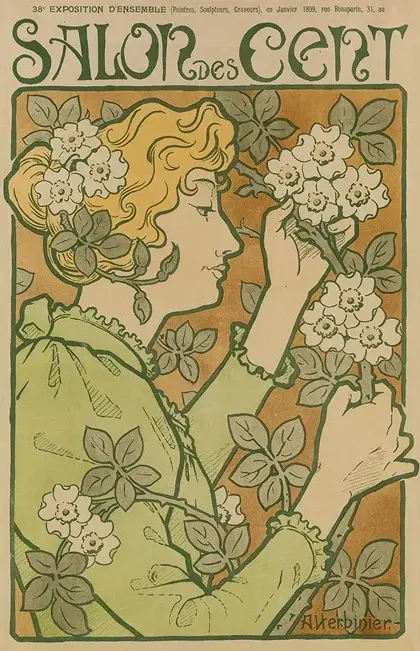

Following the handcrafted ideals of the Arts and Crafts Movement, the late 19th and early 20th centuries saw the rise of Art Nouveau—a design movement that celebrated beauty, ornamentation, and the seamless integration of art into everyday life.
Art Nouveau, meaning “new art” in French, emerged across Europe around the 1890s. It was a reaction to both the rigidity of academic art and the starkness of industrial production.
Rather than rejecting modernity, it sought to make it beautiful, weaving artistic elegance into architecture, interiors, and graphic design.
In graphic design, the movement was led by iconic figures like Alphonse Mucha, whose theatrical and product posters became synonymous with Art Nouveau’s graceful visual language.
Art Nouveau in graphic design is instantly recognizable for its:
These elements transformed posters, advertisements, and book covers into timeless works of art.
Art Nouveau elevated graphic design in everyday culture by:
The influence of Art Nouveau continues to resonate in branding, packaging, and editorial design, where elegance and ornamentation are prized. Contemporary designers revive its motifs—delicate lines, decorative borders, and nature-inspired patterns—to add sophistication and a timeless quality to their work.
✦ Art Nouveau reminds us that design can be both functional and poetic, merging nature, ornament, and typography into a seamless whole that continues to inspire over a century later.
let’s talk design, internet culture, or your latest playlist
